Pages

Wednesday, 11 March 2015

Corso di filatura immerso nella natura del Val di Sieve

Sulla strada verso Londa - on the road to Londa
Nel Centro Visite del Parco Nazionale delle Foreste Casentinesi in comune di Londa  il 7 & 8 marzo ho avuto la piacere insegnare un corso di filatura. Sono grata al Sindaco, Vicesindaco e personale del commune che ci hanno fatto i benvenuti in questo locale cosi' piacevole.

Prima veduta del centro visite - first view of the visitor centre

In the Visitor Centre of the Foreste Casentinesi at Londa (about an hour from Florence) on the 7th and 8th of March I had the pleasure of teaching a spinning course. I am very grateful to the Sindaco, Vicesindaco and staff of the commune (council) who made us welcome in such a lovely place.


Venerdi Olena mi ha portato al centro visita per prepare per il corso. Un spazio ampio e tranquillo, immerso nella natura, direttamente vicino al lago di Londa.
On Friday Olena took me to the visitor centre to prepare for the workshops. A lovely big space surrounded by nature and right beside the lake of Londa

Lago di Londa
Poi siamo andata a Firenze, una mie citta' preferite, dove abbiamo trovato gelato e ....
mandatory gelato

Then we went to Florence, one of my favourite cities, where we found lovely icecream and the bronze boar (touching his snout is supposed to ensure that you will return to Florence. I did it the first time I went there and it has worked four times, but I thought I'd better do it again incase the spell wore off!)
making sure I will return to Florence

 
Sabato mattina presto ci siamo incontrati e introdotti, 
Sofia, Maitane, Antonio, Tatiana, Esther, DG, Olena, Rossana, Marina, Elisabetta (dov'e' Rossella?)
poi comminca il lavoro con una mostra dei campioni.
a selection of samples
 
 Abbiamo a disposizione un vello di lana Shetland, proveniente da Jamieson & Smith, Shetland Woolbrokers.
Soffice e caloroso, ma anche pieno di torba secca, causa dei venti delle isole. la torba e caduta mentre la preparazione della lana.


Early on Saturday morning we met and introduced ourselves, and then started with a display of samples before starting work. I had supplied a Shetland fleece from Jamieson & Smith, Shetland Woolbrokers, It was soft and warm but also full of dried peat due to the island winds. the peat just dropped out while we were preparing the wool.

Dopo dividere il vello in tre porzione secondo la qualita' della fibra, abbiamo pettinato e cardato la lana, fino all'ora per il pranzo. Sopra del Centro Visite e un ristorante pizzeria Da Fischio, dove ci aspettano, e abbiamo mangiato bene.
Ristorante Da Fischio

After sorting the fleece into three parts according to the quality of the fibre, we combed and carded the wool until it was time for lunch. Above the Visitor Centre there is a restaurant pizzeria called Da Fischio where we were expected, and we ate very well.

Dopo pranzo commincia la filatura col fuso, tutti molto concentrate sul lavoro.
Pian piano produce ognuno uno gomitolo di filato singolo, poi un altro, e finalmente ha doppiato insieme i due per un filato a due capi. Prima matassa creata!

After lunch the spinning started, using drop spindles.
Concentrating on the work, slowly each person produced their first small ball of yarn, then another, and finally plied the two together into a two-ply yarn. First skein created!
posizione diverse, risulti uguali!


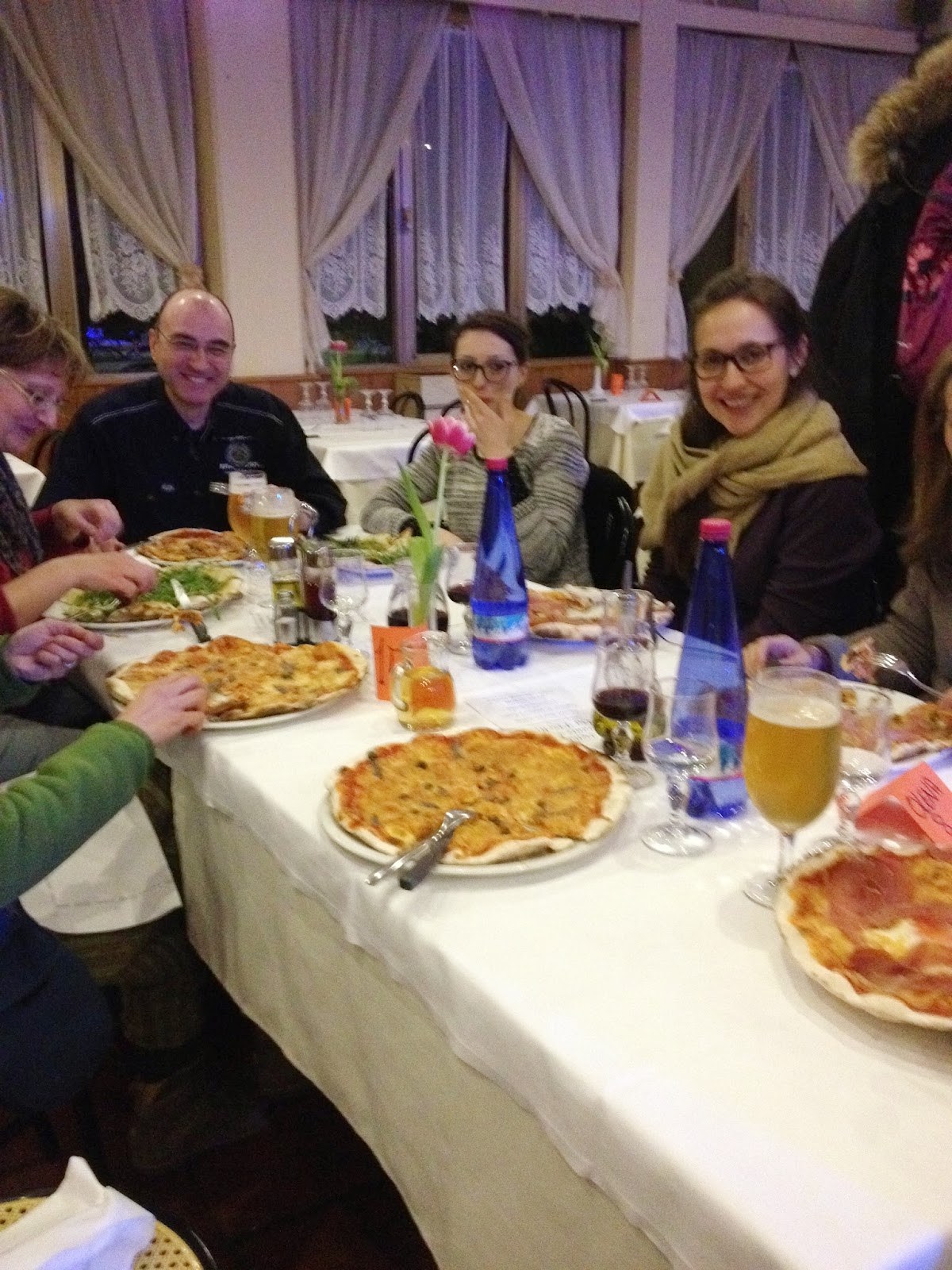
Certi fra noi sono rimasti per prendere la pizza a Da Fischio,  una serata rilassante e deliziosa. 
buon appetito!

Some of us stayed to have pizza at Da Fischio, a relaxing and delicious end to the day.

Domenica ci siamo troviati alla filatura col filatoio.
Tatiana molto concentrati sul filatoio, Marina col fuso
Due Ashford Kiwi 2, l'uno di Olena con la ruota rossa, l'altro tutto nuovo per il corso.
Ancora la cardatura per preparare la lana, ognuno ha filato un capo con il filatoio,
Maitane (from Venezuela) and her interpreter (daughter Sofia)
un capo col fuso, prima di binare col filatoio. Secondo matassa creata!

On Sunday we found ourselves spinning with spinning wheels. Two Ashford Kiwi 2's, Olena's with the red wheel and a new one I had shipped over for the workshop.
Jumper and socks co-ordinated with the spinning wheel!
More carding to prepare more wool, then everyone spun one single with a wheel and the other with a spindle before plying with a spinning wheel. 
Antonio plying - note the high-tech lazy kates!
Second skein created!


Ci siamo divertiti, con amicizie nuove e lavoro soddisfaciente. Ringrazio Antonio, Elisabetta, Esther, Marina, Maitane, Rossana, Rossella, Sofia e Tatiana per farmi la benvenuta. Spero potere tornare in questo posto bellisimo per fare un secondo corso....... rimaniamo in contatto.
We had fun, made new friends and everyone seemed very satisfied with what they had done. Thanks to everyone for making me feel so welcome. I hope to be able to return to this lovely place and run a second course.... we are keeping in touch.

Sopratutto, devo ringraziare Olena Fossi chi ha organizzato tutto con precisione e cura,  chi ha trovato una sede perfetto per il corso e chi e' stata cosi' accogliente mi ha fatto sentirmi davvero fra amici apenna arrivata.
Above all I must thank Olena Fossi who organised everything precisely and carefully, who found us such a perfect venue for the workshops, and who was so welcoming that I felt that I was among friends as soon as I arrived.

Friday, 16 January 2015

Corso base di filatura, Londa (vicino Firenze) 7 & 8 marzo

I posti sempre disponibili sono pochi - non aspetate contattarci!
Sono felice di informarvi che il corso si terrà nei locali del Centro Visite del Parco Nazionale delle Foreste Casentinesi in comune di Londa e sull'omonimo Lago.http://www.parks.it/parco.nazionale.for.casentinesi/cen_dettaglio.php?id=62

ORARIO : dalle ore 10 ale ore 18.

PREZZO : 160 euro per due giorni di corso oppure 80 euro una sola giornata.

In questo costo NON è incluso l'alloggio nè i pasti, che saranno a carico individuale. Sarà possibile mangiare nei locali dell'adiacente ristorante Da Fischio ad un prezzo di euro 10 per persona al giorno da pagare di persona sul posto.

 In questo costo è INCLUSO il materiale necessario per seguire il corso, anche sarà la possibilità di acquistare altro materiale ed attrezzatura con notevole sconto e senza spese di spedizione.
Per chi fosse inoltre interessato all'acquisto di un filatoio (il cui uso verrà introdotto il secondo giorno) sono in grado di procurare anche in questo caso un buon sconto sulla gamma Ashford , sempre senza spese di spedizione (per ordine confermate con pagamento non oltre il 31 gennaio)


PROGRAMMA
Sabato Mattina 3 ore :
Le fibre e la preparazione.

Tipi e caratteristiche della lana e delle altre fibre.

Il vello sucido, come dividerlo secondo la qualita, istruzioni per quando e come lavarlo (o non), la cardatura e la pettinatura a mano .

I motivi per metodi diversi di preparazione.

Come preparare altre fibre, esempio la seta.
Pausa pranzo

Sabato pomeriggio(3 ore):
La filatura col fuso : base importante anche per chi vorrà filare col filatoio.

Filati 'singoli', come e perche' doppiare i filati.

Come fare le matasse e 'finire' il filato.

Domenica (6 ore + pausa pranzo):
Il filatoio.
Modelli dei filatoi, come sceglierlo, le parti, come mantenere il filatoio.

La filatura col filatoio - filati singoli, la doppiatura - creazione di una matassa di filato a due capi.

Il numero dei filatoi a disposizione sarà limitato, per cui se qualcuno già lo possiede , sarebbe gradito che lo portasse e lo comunicasse specificando il modello.

Diversamente , se qualcuno è interessato all'acquisto di attrezzatura dalla gamma Ashford, con prezzi scontati rispetto al costo di listino , per ordine confermate con pagamento non oltre il 31 gennaio  può approfittare della proposta contattando Deborah.gray7@btinternet.com  Una spedizione all'ingrosso sarà spedito direttamente nel luogo del corso senza alcuna spesa di spedizione, così come anche altri materiali ed accessori aspo,cardatori,fusi ,fibre aggiuntive e altro che potrete richiedere.

 
Iscrizioni: A questo punto e essenziale contattare subito l'organizzatrice Olena Fossi oppure via email all'indirizzo hollyfoxy@gmail.com oppure al 3286486393

Thursday, 8 January 2015

New Year, New Plans

Happy New Year everyone! I hope you all had a lovely festive season and have lots of plans for fabulous fibre-y projects in 2015.
I've been making plans for workshops for the new year! But unfortunately the tab for the page with workshop dates seems to have disappeared and so no-one can find it, so here's (edited to fix link) the  link.
I'm planning some experiments with Icelandic and Scottish Valais Blacknose fleece,
Icelandic sheep and lambs at Grunegerdi


Scottish Valais Blacknose sheep at Braco Show


Scottish Valais Blacknose fleeces delivered to my house!!!!!

lots of dyeing experiments
including getting into the blues (indigo),
and of course loads of knitting projects.
Currently on my needles I have this:
Jamieson & Smith yarn and pattern for Hairst, designed by Sandra Manson and modelled by Ella Gordon
a Hairst sweater (designed by Sandra Manson, with a traditional Fair Isle yoke), a Persian Dreams (Jenise Reid) hexagonal cushion in handspun and hand dyed yarn and the next in my Traces series (see last post).

I have a lace scarf to block, and on the sketch pad another Knitsonik inspired design, this time based on an antique book binding,
and a tunic for some hand dyed and blended yarn I spun last year. 
There will be a series of workshops in Auchterarder (Perthshire),here's (edited to fix link)   the  link to details for the first half of the year. There's spinning for beginners on Feb 15th and March 22nd; Solar Dyeing in the morning and Spinning Multicoloured Fibres in the afternoon of April 26th; Blending Coloured fibres on May 17th and Spinning for Texture (art yarns) on 21st June.

Even more exciting than these, the renovation work on my seafront flat in Oban (Argyll) is now underway. It will provide a fantastic space for knitting and spinning, with a sea view

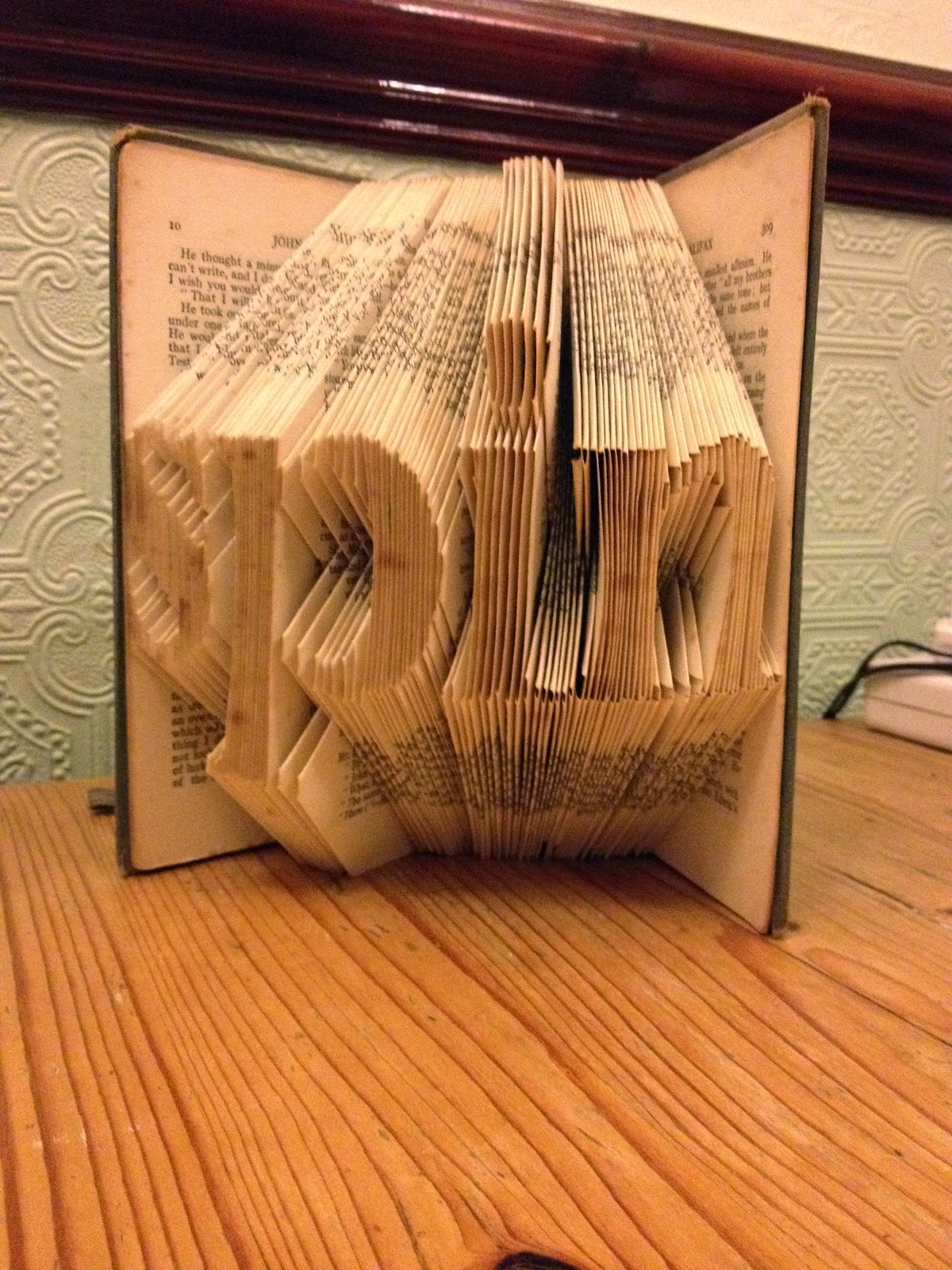
and a wood-burning stove for colder days. Once the works are complete I will be planning some spinning and knitting retreats, workshops, maybe some guest tutors and hopefully a monthly knitting group on Saturday mornings. I'm also going to 'branch out' and offer a book-origami workshop, so let me know if you are interested.
upcycled books


Plans are also afoot for spinning workshops in Florence in March and near Turin in May, and for a return to Shetland Wool Week in September/October. Jamieson & Smith have invited me to repeat the popular beginners' spindle spinning and fleece preparation workshops that I ran there last year, and I'm cooking up something else too - so keep an eye out here on the blog, and/or on my Facebook page, for updates!

I hope you'll join me for some of the activities and adventures I have planned, and that 2015 gives us all time to complete at least some of our projects!


Wednesday, 31 December 2014

Traces (part 1)

For my last post of 2014 I want to give you a glimpse of a long - running project - or really a series of projects, under the title of TRACES.

A few years ago I went to Shetland for the first time, and on several beaches I found sea-worn fragments of blue and white china. Much of it I recognised as Willow Pattern - a design which links back to my childhood when my mother used to tell me the story of the two runaway lovers depicted on the plates she collected.
In the museum in Lerwick I found a display about the importance of tea in the Shetland knitting economy, illustrated by a tea table set with Willow Pattern china and knitted cakes.
 
I started to think of a project that would incorporate the fragments, placing them in to the whole design of the intact pieces in the collection,
I was thinking about the variations in the design on different pieces and how the fragments, some with the transferred design almost completely worn away, represented traces of the lives of people who had used, and ultimately broken and discarded, the china. And about involving knitting, of course. I started to think about translating elements of the designs on the china fragments into knitting, using stranded colourwork which is a technique so closely linked to Shetland. So the china fragments came home with me and ideas percolated slowly in my brain...

On my next visit to Shetland, for Wool Week 2013, I was signed up for Felicity Ford's Quotidian Colourwork workshop. Felicity invited us to bring our 'everyday' inspiration, and she would help us translate it into a stranded colourwork design. Bingo! And so, carefully packed in my hand luggage for the flight to Shetland I had not only the precious bag of fragments, but also the smallest item from my late mother's collection of Willow Pattern - which turned out to be a large and heavy soup plate!

The class was just what I needed to start getting the first design down on paper, and most importantly to start actually knitting it. The Jamieson & Smith palette of colours in their jumper weight Shetland wool yarn provided three perfect shades of blue, as well as the natural white and a soft yellowy beige for some of the stained areas. After a few rows I knew I would have to revise the chart, but I was a bit stuck. Felix carefully considered the problem and came up with a very simple but effective solution. This time the swatch was just what I had had in mind! So Traces 1 was born.


Once I returned from Shetland, life, and other more pressing projects got in the way of any further work on Traces until it was almost time for Shetland Wool Week 2014. I charted another design based on a different fragment - not Willow Pattern, so I will have to look out for the design that this one is from. I restocked my supply of blue and white Shetland yarn, and cast on the swatch. Traces 2 has parts which require three colours per row which makes it more fiddly to knit, but I do prefer it to the sample I knitted using just one shade of blue throughout.

When I got home I wanted to experiment with different combinations of blues, but Christmas was also approaching with the need for some small knitted gifts for friends and family. By starting and ending each swatch with a few rows of corrugated rib in blue and white, and adding a steek, the swatches became mug cosies.
L-R 1b, 1a, 2a, 2b

I worked three colour variations of each design - my favourites are 1a, the very first one, and 2c which uses a greyer blue for one of the contrasts - unfortunately this was just a scrap in my stash and I don't think it is a J&S colour.
L-R: 1a, 2c, 1c

I have more fragments with different design elements to work on, and also ideas for using the designs in different projects, so Traces will be continuing for some time. Its a great excuse for beachcombing!

Monday, 10 November 2014

The Knitsonik Stranded Colourwork Sourcebook

Its here at last!

 You might remember that about six months ago I blogged here about the Kickstarter campaign to crowdfund Felicity Ford’s inspired plan to publish this wonderful book.

 The story begins a bit earlier than that – or at least my small involvement in it does. It all started with Wovember – the month long blog campaigning for REAL WOOL to be valued and celebrated, which has run each year in November for the past few years (catch this year’s Wovember while you can). Felicity is one of the founders of Team Wovember, so I ‘met’ her (virtually) and came to appreciate her thorough approach to understanding WOOL and THINGS WOOLLY.

Then during Shetland Wool Week 2013 I was lucky enough to get a place at her Quotidian Colourwork workshop. What a joyful day that was – I’ve described it here.

The idea behind Quotidian Colourwork – and the Knitsonik Stranded Colourwork Sourcebook – is that you can celebrate your everyday inspirations – your surroundings and favourite objects – in woolly form. And, most importantly I think, Felicity shows you how to do it for yourself.

A day or two after that first workshop, over a delicious Nepalese curry in Lerwick (am I the only person to find that a bit incongruous?!) Felicity revealed her ambition to produce a book which would demonstrate a process or system for people to follow to translate their inspirational object or image into stranded colourwork knitting.

Fastforward a year, via a hugely successful funding campaign and an enormous amount of hard work and creativity, to Shetland Wool Week 2014. The first ever printed copies of the Knitsonik Stranded Colourwork Sourcebook were sent hot off the press to Felicity care of Jamieson & Smith (the Shetland Wool Brokers) and actually arrived while I was teaching a spinning class there! Many of Felicity’s comrades-in wool were there to share the excitement of seeing those first copies.

 So – what is in the book? Mainly Felicity’s infectious enthusiasm and her deep love of WOOL, coupled with her keen observation and connected-ness with the places and objects around her. She takes us through worked examples with inspirations as diverse as buildings, electronics, plants, a road and fruitcake.
 
There are charts and even a few patterns you could follow to replicate Felicity’s work, but the real purpose of the book is to give you the tools to develop your own colour palettes and charts from the things that inspire you.

The book is copiously illustrated with beautiful photos taken by Felicity’s brother Fergus Ford – it is clear that he obviously understands the essence of the work – and the pictures, rich colours and layout make it a pleasure just to leaf through it. Felicity has also written about the objects and places, their history and her connection to them, in a way that not only explains why she wanted to celebrate them in knitting, but also reminds you of your own connections, and that these are deeper than a solely aesthetic appreciation.

Most importantly, the combination of the content and the way it is written, the book's design and all those gorgeous photos really carries the conviction that you too can play with yarn, colours and shapes to bring your own inspiration to life. Choosing colours, drawing your own charts, and then knitting them, is way too much fun!

By way of illustration, here are a couple of projects I have underway – the Willow Pattern pieces found on Shetland beaches – two of the details now charted


And a chart, not yet swatched, based on the tooling on the spine of a book which has been in my family for about a hundred years


You will see more of these as they progress!

 
Buying the book also gives you access to a pdf version which includes black & white versions of the charts in the book and space for drawing your own charts, so you don’t have to write on your lovely book.

this one's mine - buy your own!!
You can order your copy here

And while you’re about it, I strongly recommend that you order a shade card from Jamieson & Smith here because once the book arrives you will want to get started straight away!

  Felicity and I were reflecting on some of the Q&A in my original blog post about the funding campaign. This is what she wrote:

“The questions that you and others asked me on the first blog tour (the one that coincided with the Kickstarter campaign) really helped me to clarify my approach to making the KNITSONIK Stranded Colourwork Sourcebook. I thought it might be interesting to revisit a couple here and to share how they influenced the book.
These are two questions which you asked me which were really key to my approach to the structure and feeling of the book and I think they are really related;

1. There is a world of difference between giving someone precise instructions to follow to produce a more-or-less identical product (for example, a knitting pattern which specifies yarn, needle size, number of stitches and charts etc), and encouraging people to follow their own inspiration to create something unique, while giving them enough guidance. Can you say something about the balance between directing and supporting creativity?

2. Is there something in there about learning that 'making mistakes' is part of the creative and learning process?

One of the challenges was how to show creative process without being overly proscriptive. The balance lies somewhere between offering structure and maintaining openness. Rules and guidelines are really helpful and often aid creativity because they give clear starting points; on the other hand, you don’t want to make so many rules that people start panicking that they are doing things wrong.

I was really aware of the need to strike this balance between structure and freedom when writing The KNITSONIK System, and I found it quite nerve-wracking and scary! 

Just like in swatching, there were a lot of early drafts and mistakes before the words came right. I was helped by Tom (tomofholland.com) and Kate (katedaviesdesigns.com) and by the folks I have affectionately termed “the book midwives” in the acknowledgements section of the book; all these wondrous folks gave me great feedback and helped me to reflect on how to improve the writing. Feedback is vital to creative process and having folks read through my work and give me constructive criticism along the way was key. I think that’s worth mentioning, because it’s also true for the swatching process that is celebrated in the book. Showing the swatches to comrades, getting feedback – it all helps your ideas to form along the way.

I realised that friendliness would be important, too; I think enthusiasm and warmth go a long way towards opening up the creative process and when you’re in a room full of people you can smile and make jokes and play! However it’s harder to concentrate those elements into a printed format. That’s where the talents of Nic Blackmore (http://laliloo.squarespace.com/) and Fergus Ford (http://fergusford.com) come in; they added so much.

Nic Blackmore
Nic really understood the project from the outset, and was an amazing collaborator on the design side of things. We drank a lot of coffee, laughed with her lovely dog, Maisie, and discovered a mutual appreciation for fonts and typefaces.
Maisie and Felicity looking at proofs - Felicity is the one in the Shwook hat
 Having these wondrous things in common laid a great foundation for our work, and a feeling of affinity. The first time I saw The KNITSONIK System laid out on the pages, my first thought was THIS LOOKS FRIENDLY! NIC HAS MADE IT LOOK FRIENDLY! I am not sure exactly how she has done that, but I think it is magic.

Ferg’s great passion is wedding photography. He originally studied theatre and though he has a lot of technical knowledge about cameras and light, I think his background in drama comes through in the emotions he captures in his work. I learnt a lot about getting a mood or a feeling into a photograph from working with my brother.

For instance we had a couple of frustrating afternoons trying to put everything on a white studio background. I wanted to show all the things you need to have at the start of the creative swatching process – needles, pencils, paper, yarns etc. – and was really stuck on this idea of showing them all neatly laid out and itemised. feeling of starting a creative project; of getting your pencils and paper and your photos, of ordering your yarn and picking the shades from your shade-card, and Ferg said that he felt the plain white studio background was sterilising the joy of creativity.
But then we started talking about the loveliness of the feeling of starting a creative project; of getting your pencils and paper and your photos, of ordering your yarn and picking the shades from your shade-card, and Ferg said that he felt the plain white studio background was sterilising the joy of creativity.
He suggested instead that we lose the white background for those shots and use my lovely old worn work table as a background surface. The table is so much more charismatic than the plain white studio background was, and the photos we took against the warm wood are a far richer invitation to play and create and enjoy colour than my original idea had been; Ferg just knew the feeling was all wrong in the original white studio setup.

Felicity calls this photo 'messy work table - all I can say is - she hasn't seen  my work table!!
Another happy experience was when we went around my garden picking leaves and organised them from dark green to pale yellow. I think our excitement at finding such a rich palette right there among my plants comes across in the final image that we got, and I remember still the energy of us both exclaiming “that one is such a great colour next to that one” “that one is definitely lighter” and then “let’s get all the yarn out to match!”
 
Experiences like these kept reminding me of your question about whether ‘making mistakes’ would be celebrated in the book the whole time I was working on it; I think it’s fundamental. For me the number one maxim of all creative processes is that you have to be allowed to make a mess along the way; to get it wrong, muddle it up, do bad things to colours and so on. Remembering this helped me to really enjoy making the book and to savour the process – even the bad chapters that will never see the light of day and the photos that didn’t make it into the book... they are all part of the process.  

I especially relished writing the captions for the swatch pages in the book that deal with my own creative experiments. It felt very liberating to put my mistakes and bad knitting into a knitting book, because it is a way of celebrating the process of how we learn and create and because I hope it will give other knitters courage. One of my favourite photos from the book is the one where I am standing under my walnut tree holding the swatch which I designed from it; I told Ferg the image needed to be really triumphant: I want to spread the idea that we really can feel this good about knitting swatches full of original stranded colourwork.

Thanks so much for asking me about creative process and mistakes back in April – your questions really helped me!